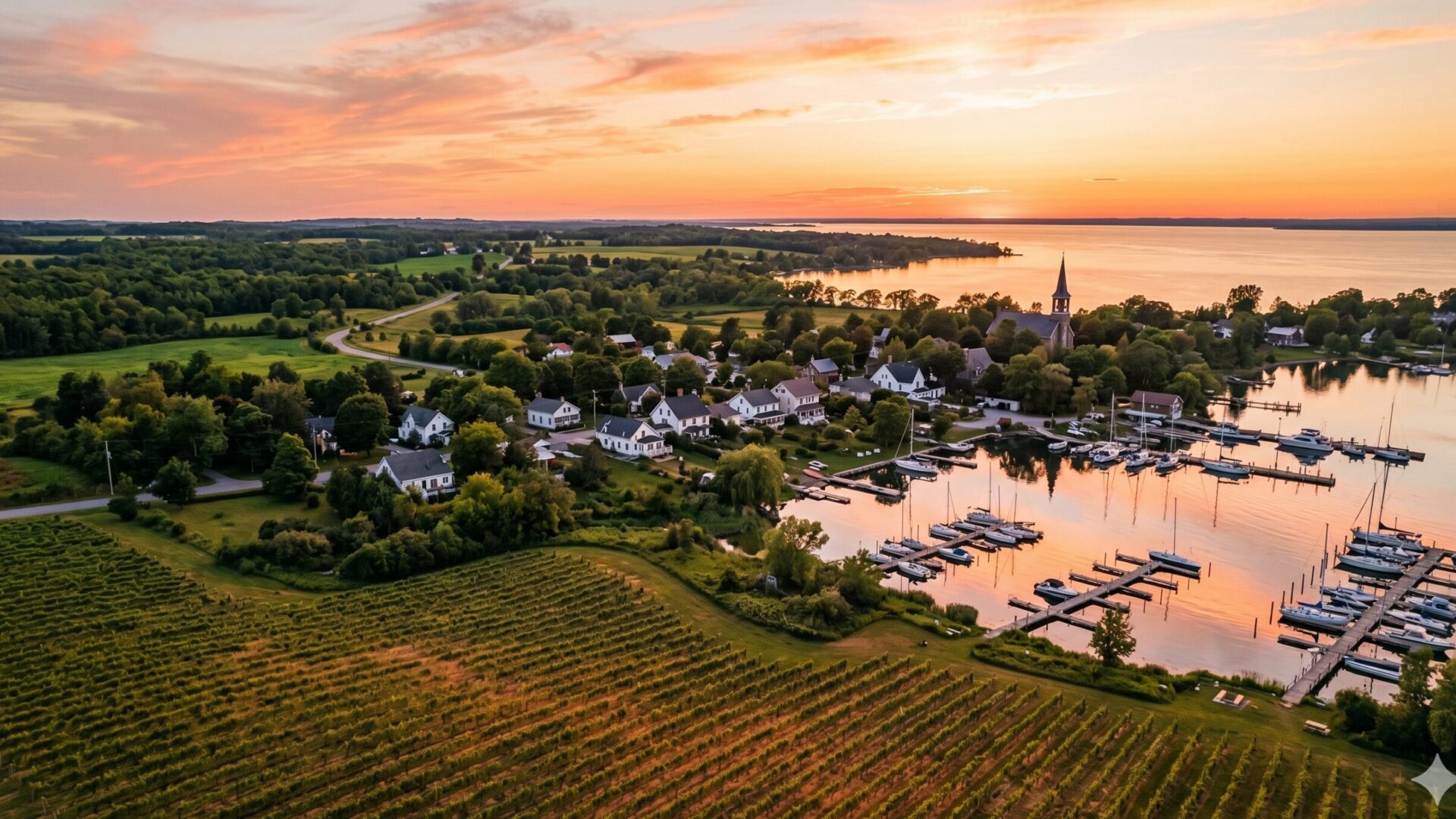
There’s a moment that happens to almost everyone who visits Prince Edward County for the first time. You’re driving through Wellington or Picton, or you’ve stopped at a winery on a Tuesday afternoon with almost no one else around, and the thought arrives quietly but firmly: I want to live here.
That feeling isn’t nostalgia or escapism — it’s recognition. Recognition that what PEC offers is increasingly rare in Ontario, and that it has quietly become one of the province’s most compelling real estate stories.
What Makes PEC Different From Every Other “Cottage Country”
It’s a Genuine Year-Round Community
Unlike many cottage markets that essentially shut down after Thanksgiving, PEC has a living, breathing local economy. Picton is a real town with independent restaurants, galleries, a hospital, and services that support full-time residents. Wellington is walkable and charming in January.
The Wine and Tourism Economy Is Structural, Not a Trend
PEC now hosts over 40 wineries and is one of Canada’s most recognized wine destinations. The tourism industry around Sandbanks Provincial Park, cycling routes, and the farm-to-table food scene generates millions of dollars in visitor spending annually. That economic engine supports property values in ways that pure seasonal cottage markets simply can’t replicate.
Short-Term Rental Potential
For investors, PEC’s tourism draw creates genuine short-term rental income potential. Properly managed properties in Wellington, Bloomfield, and near Sandbanks regularly achieve strong occupancy through the May–October season. A property that earns income during peak season while building long-term equity is an increasingly rare combination in this province.
The Market in 2026: Patient Capital Being Rewarded
PEC’s market is running slightly softer than urban Belleville right now, which is precisely what creates opportunity. Activity picks up meaningfully from May through July as GTA buyers make their summer moves, and 2026 is tracking consistent with that seasonal pattern.
What does “softer” mean in practice? It means motivated buyers can negotiate. It means listings that sat through winter are now priced for reality. It means you can take your time, do a proper inspection, and structure a deal without the fever-pitch competition that defined 2021–2022.
How PEC Compares to Other Rural Ontario Markets
- Muskoka: Premium prices for premium cottage country — but largely seasonal, with limited year-round amenities. Entry-level properties on lakes start well above PEC equivalents.
- Kawarthas: More affordable and increasingly popular, but less distinctive as a lifestyle destination.
- Prince Edward County: Year-round community character, genuine tourism economy, limited land supply on a peninsula, and a growing national/international profile.
Picton and Wellington: The Two Villages to Know
Picton
The county seat. You’ll find the hospital, the most commercial services, the highest concentration of heritage homes, and the broadest price range. Picton rewards buyers willing to do some work, with Victorian-era streetscapes that are genuinely irreplaceable.
Wellington
Smaller, more boutique, and increasingly sought-after. Wellington’s main street has the restaurants and galleries that make it feel like a destination in its own right. Wellington properties are particularly strong performers for both personal use and STR income.
The Rate Picture: Why 2026 May Be a Window
With major Canadian banks forecasting rate stability or modest easing through 2026, borrowing conditions are the most predictable they’ve been in several years. That matters for a market like PEC, where many buyers are purchasing second properties.
Team Roach knows Prince Edward County deeply — the villages, the back roads, the properties that represent real value and the ones that don’t.
Reach out to Team Roach today to start your Prince Edward County search.